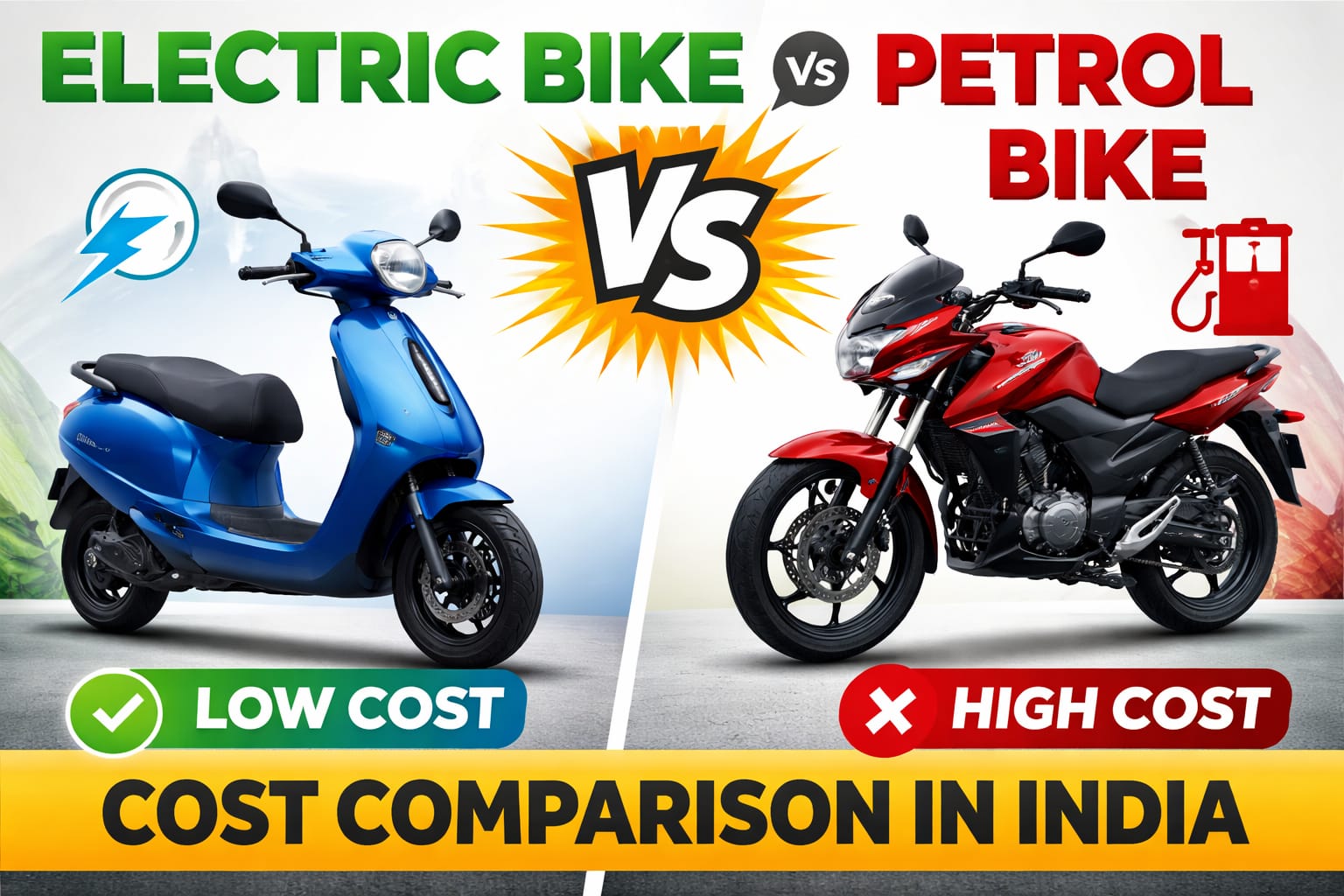
Electric Bike vs Petrol Bike Cost Comparison
Hello friends If you want to buy A Bike,But Confuse to choose electic vs petrol, With rising fuel prices and growing environmental awareness, many people in India are considering electric bikes as an alternative to petrol bikes. Electric vehicles are becoming increasingly popular because they offer lower running costs and are environmentally friendly.
However, many buyers still wonder whether electric bikes are actually cheaper than petrol bikes in the long run. While the initial purchase price of electric bikes may sometimes be higher, the running cost and maintenance cost are usually much lower compared to petrol bikes.
In this article, we will compare electric bikes and petrol bikes based on different factors such as purchase cost, running cost, charging or fuel cost, maintenance expenses and overall long-term savings.
Electric Bike vs Petrol Bike – Quick Comparison
| Factor | Electric Bike | Petrol Bike |
|---|---|---|
| Fuel Type | Electricity | Petrol |
| Running Cost | ₹0.25 – ₹0.40 per km | ₹2 – ₹3 per km |
| Maintenance Cost | Low | Medium to High |
| Environmental Impact | Eco-friendly | Pollution |
| Noise Level | Very Quiet | Loud Engine Noise |
Purchase Cost Comparison
The first factor most buyers consider is the purchase price. Petrol bikes are generally available at a wide range of prices starting from budget models to premium sports bikes. Electric bikes are also becoming more affordable, but some models can still be slightly more expensive compared to similar petrol bikes.
For example, modern electric scooters such as Ola S1 Pro and Ather 450X offer advanced features like touchscreen displays, smartphone connectivity and powerful motors. These features can increase the initial price but also provide better long-term savings due to lower running costs.
Government incentives and EV subsidies in many Indian states also help reduce the purchase price of electric vehicles, making them more attractive for buyers.
Running Cost Comparison
Running cost is one of the biggest advantages of electric bikes. Electric bikes use electricity instead of petrol, which is significantly cheaper.
On average, an electric bike consumes around 3 to 4 units of electricity for a full charge depending on the battery capacity. If the electricity price is around ₹8 per unit, the total charging cost for a full charge may be around ₹25 to ₹35.
If the bike provides a range of around 100 km per charge, the running cost becomes approximately ₹0.30 per kilometer. This is extremely low compared to petrol bikes.
In comparison, petrol bikes with an average mileage of 50 km per liter will cost around ₹2 to ₹3 per kilometer depending on petrol prices. This means electric bikes can be nearly 5 to 8 times cheaper to run.
Maintenance Cost
Electric bikes have significantly fewer moving parts compared to petrol bikes. A petrol engine includes many components such as engine oil systems, filters, clutch assemblies and exhaust systems which require regular maintenance.
Electric bikes mainly consist of a battery pack, motor and controller. Since there are fewer mechanical components, the chances of mechanical wear and tear are lower.
Maintenance tasks like oil changes, engine servicing and gearbox repairs are not required for electric bikes. This reduces long-term maintenance costs significantly.
Charging Cost vs Fuel Cost
Charging an electric bike is usually very convenient because it can be done at home using a standard power socket. Many electric bikes can be fully charged within 4 to 6 hours.
Petrol bikes require regular visits to petrol pumps. With petrol prices increasing regularly, the total fuel cost for daily commuting can become quite expensive.
For example, if a rider travels 30 km daily using a petrol bike, they may spend around ₹150 to ₹200 on fuel every week. In contrast, an electric bike may only require ₹30 to ₹40 worth of electricity for the same distance.
Environmental Impact
Electric bikes are considered much more environmentally friendly compared to petrol bikes. Petrol engines produce carbon emissions and contribute to air pollution.
Electric bikes do not produce direct emissions during operation. This helps reduce pollution levels in cities and supports cleaner transportation.
As governments around the world encourage the adoption of electric vehicles, the environmental benefits of EVs will become even more important in the future.
Long-Term Savings
Although the initial purchase price of electric bikes may sometimes be slightly higher, the savings in fuel and maintenance costs can quickly offset this difference.
If a person rides 10,000 km per year, a petrol bike may cost around ₹25,000 to ₹30,000 in fuel expenses. An electric bike may only require around ₹3,000 to ₹4,000 worth of electricity for the same distance.
Over a period of five years, the total savings can be quite significant, making electric bikes a cost-effective option for long-term ownership.
Pros and Cons
Electric Bike Pros
- Very low running cost
- Low maintenance requirements
- Environment friendly
- Smooth and silent ride
Electric Bike Cons
- Charging time required
- Charging infrastructure still developing
- Battery replacement cost
Petrol Bike Pros
- Long range without charging
- Fuel stations easily available
- Faster refueling
Petrol Bike Cons
- High fuel cost
- Higher maintenance cost
- Pollution
Which One Should You Choose?
If your daily travel distance is within 40 to 60 kilometers and you have access to home charging, an electric bike can be a great choice. It will help you save money on fuel and reduce maintenance expenses.
However, if you frequently travel very long distances or live in areas where charging infrastructure is limited, a petrol bike may still be a practical option.
Conclusion
Electric bikes are becoming increasingly popular in India due to their low running cost, minimal maintenance and eco-friendly operation. While petrol bikes still offer convenience for long-distance travel, electric bikes provide significant cost savings for daily commuting.
As battery technology improves and charging infrastructure expands, electric bikes are expected to become even more affordable and practical in the coming years.
Must Read :-
Best Electric Scooters Under 1 Lakh in India (2026)